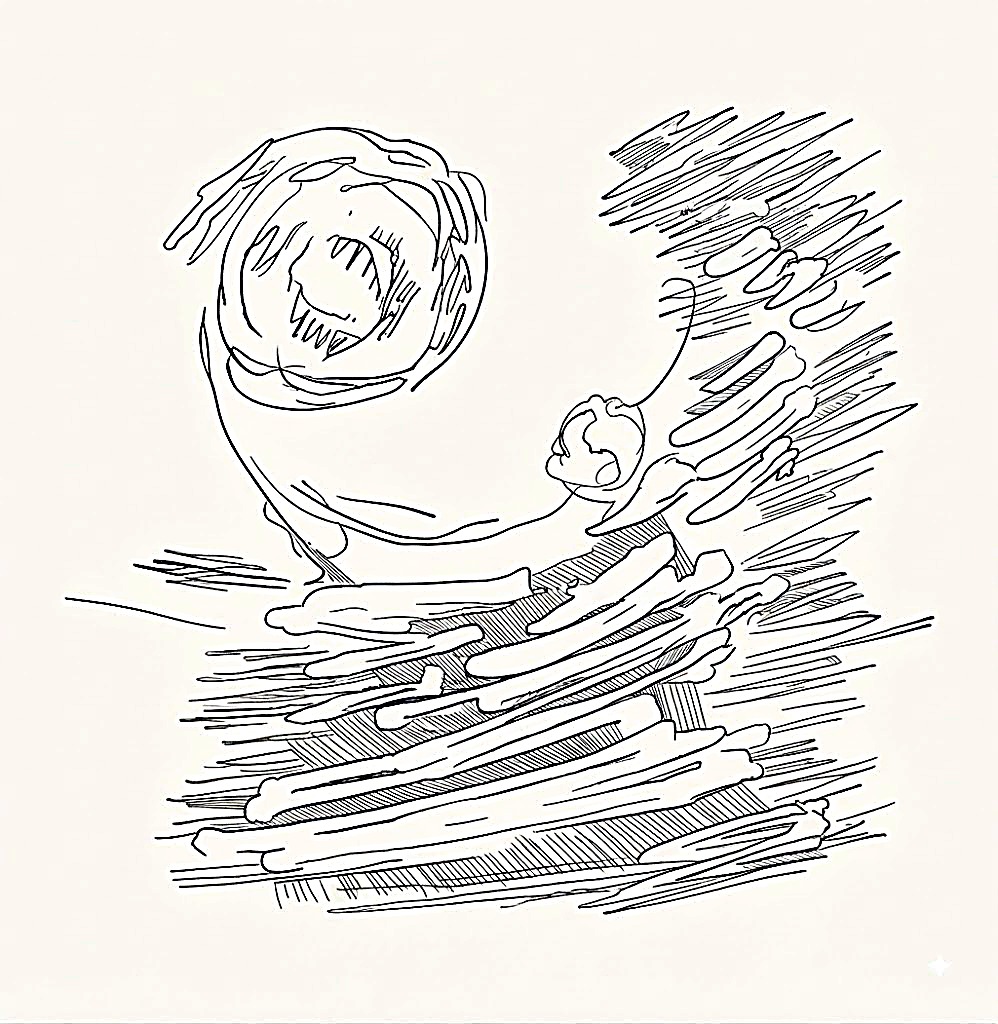
The dream arrives from somewhere inside compelling you forward. Reality arrives from an unexpected source transforming your trajectory. Together they form you.
I dreamt of being an architect at ten.
To this day, I am not sure what prompted me. Whatever it was, I took it seriously. I became one.
Being an architect has been a passionate and frustrating practice, rewarding and disappointing at times. I suppose I’m not the only architect who feels that way.
It’s taught me how to conceive ideas and realize them, discern things in detail and introspect carefully, how to invest in a meaningful enterprise over a stretch of time, and how to sacrifice for what I believed in.
It’s showed me how to make critical decisions under pressure, whether on a construction site, choosing a job, or developing a project. It’s taking me to places I never expected transforming my career in unpredictable ways.
I remember the opening lecture of a first year engineering class. The professor told the students to look to their left, look to their right, ahead, and behind and note that most of those people would not practice architecture in an office.
At the time I dismissed that.
I started my career by being laid off. A few weeks before my starting date in a prestigious Los Angeles firm, the office called to inform me that forty percent of the staff was being let go.
Fortunately, I was asked by my friend’s father to redesign and renovate a house he had just purchased as an investment.
Though I had no experience producing a construction document or being a contractor, I said yes, and agreed to a $500/month fee. It was 1983. The course of my career had been altered on day one.
After completing the house, I spent a year designing television and movies sets in Hollywood because architectural work in Los Angeles continued to lack.
But Hollywood was not for me. So, after nine months traveling, I moved to New York City, where I finally started to work in an architectural office.
Three years there working on not-for-profit, low budget projects, interacting with difficult foundations and government agencies, provoked me to consider an offer from a general contractor to help them bail out a project that was substantially behind schedule and losing money.
High end architects were doing low end work at the time because private development in the city was sparse due to continuing weakness in the economy. The project architect was treating a homeless shelter as if it was an uptown luxury apartment building.
Having been a client’s representative, a normal architect’s role in the 1990s, being comfortable on site, and wanting to build as well as design, I accepted the GC’s offer with an 80% increase in the salary—$23,000/year to $41,500; waking up to the reality that my career would take a different trajectory than the one I had planned.
It was clear from that moment on my career would continue on the atypical path I commenced in LA. Since then, my experiences as an architect-developer have provided me a sense of freedom and opportunity that my architectural friends and colleagues did not seem to share.
I’m happy with the path I chose.
When we step onto the traditional path, we’re told to focus on the process; that if you follow it, it will lead you to the promised land of architecture.
But if you look at how that process actually functions, you realize the path is designed to serve the masters of the architectural profession and the clients they attract—with less creative, financial, or professional reward than is fair for the hard work and dedication required to become a good architect.
From the very beginning of the licensing process, this becomes obvious.
Compare the standard licensure experience of an architect to other major licensed professions:
Here’s how lawyers and doctors fare:
In the decision to become one, most architects believe in the architectural mythology of making the world a better place and of creating beautiful, healthy and meaningful places to live, work, and experience higher thoughts as in a museum or cathedral.
I did.
This is reinforced by the literature and in the schools, which portray the sacrifice required to achieve that goal as the price of entry to a prestigious, highly valued, and meaningful profession that will contribute to society.
But the high value referred to—the professional status, and tantalizing creative satisfaction—is often devoid of the appropriate material compensation while doing mostly commercial projects driven by business demands at the expense of the architecture.
When you look at the standard income comparison in the United States, the financial ceiling of the traditional career becomes painfully obvious:
| Career Stage | Architects | Lawyers | Physicians |
|---|---|---|---|
| Entry-Level(0–3 Years) | $64,000 – $87,000
| $95,000 – $140,000
| $65,000 – $75,000
|
| Mid-Career(3–8 Years) | $94,000 – $115,000
| $145,000 – $210,000
| $240,000 – $380,000
|
| Senior-Level(8–15 Years) | $120,000 – $178,000
| $220,000 – $350,000
| $310,000 – $520,000
|
| Partner / Top Tier(Maximum Scale) | $125,000 – $245,000+
| $450,000 – $1,000,000+
| $550,000 – $800,000+
|
Note: These are general averages to highlight the income disparity between these professions.
Compared to non-licensed professionals like a regional sales manager or a private developer—professions that do not require an average of the 13 years it takes for architects to credential, combined with the profound legal liabilities of construction—architects come out poorly.
Unfortunately, this is the reality of the conventional path.
Our time, energy, technical capability, and design intelligence are treated by the commercialized system that most architects are dependent on as a low-margin commodity.
As my structural engineering professor hinted on that first day in class, practicing architecture in a conventional way is not the only option.
There are alternatives that provide more agency, value for your effort, and bridge the gap between traditional office practice and other forms of practice or business.
While time and money are not everything, they are fundamental measures of job satisfaction and success.
As importantly, the imperative to work the way you want, with the people that you feel are most compatible with your values, alongside the other goals you have as an architect, are the daily measures that provide for both the professional and personal enjoyment from your work.
That should be the goal: achieving all of those in the most appropriate method that suits you.
I knew early on that the other aspects of the building industry—construction and real estate development—were things I wanted to explore.
I sensed that they would open up different opportunities that the traditional architectural career would offer me.
What I didn’t know then was that by choosing an alternative route I would live and work in culturally dynamic, unusual places, and achieve a direct influence over the outcome of the work I was engaged in.
Being in the trenches, making tough decisions, from napkin sketch to key in the door, gave me job satisfaction in a way I never dreamed of as a kid.
I wrote this essay to provide an alternative view of a typical architect's career.
I wanted to offer options for career advancement and reward; options that are available at any stage, even when other people think it's too late for a change.
This is where the “Gap” referred to in the name of this website becomes the critical space to consider and meditate on other possibilities.
The gap is a moment before decisions are made or actions taken, when choices are formed. In that moment, the course of our lives are determined.
Neuroscientists call this the Prefrontal Window, a space where conscious choice resides.
Most of us react automatically to events based on the constituent parts of our psyches formed in childhood, in growing up, in our culture, environment, and nature.
Rather than act with clear intention we often react from a source of ready-made conditions and responses that dictate our choices and actions.
The only way out of this “react trap” is challenging those ready-mades by pausing to examine them with an open mind and courage to confront them.
The question arising in any situation, in any personal or career juncture is whether the direction we are taking is a real choice based on critical assessment or a pre-conditioned reaction based on what is expected of us by others or ourselves.
In the absence of taking a moment, however long, we often choose a direction that is not aligned with what we truly want or reflect who we truly are.
This is when the gap becomes the place to take the deliberate pause we need to look at as objectively as we can and consider next steps.
This essay is intended to present a different framework for career thinking and a method for doing so.
It suggests alternatives for choosing a path that best serves you, whether you are entering the field, navigating a midstream transition, or wanting to explore more possibilities at a later stage.
We all have dreams.
In ancient religion and culture, dreams were thought of as messages from the gods, the fates, or the divine future.
In modern terms, our dreams often reveal the subconscious truth, desire, or vision we have for ourselves.
We can wrestle with those all our lives.
Or pause to identify what truly defines and expresses the life we want, the work we want to do, and how we want to go about doing it, with whom; and in doing so turn a dream into a reality that fulfills us.